 English
 CN
CN ES
ES 86-573-88890126
Printing high-resolution graphics on PVC tarpaulin has become a standard requirement for outdoor advertising, banners, and industrial signage. However, achieving sharp, smudge-free results on this non-porous, flexible material remains a technical challenge for many printers. Unlike paper or fabric, PVC tarpaulin does not absorb ink readily. Its smooth, plasticized surface can cause ink to sit on top, resulting in smudging, poor adhesion, and loss of fine detail.
Understanding the Surface of PVC Tarpaulin
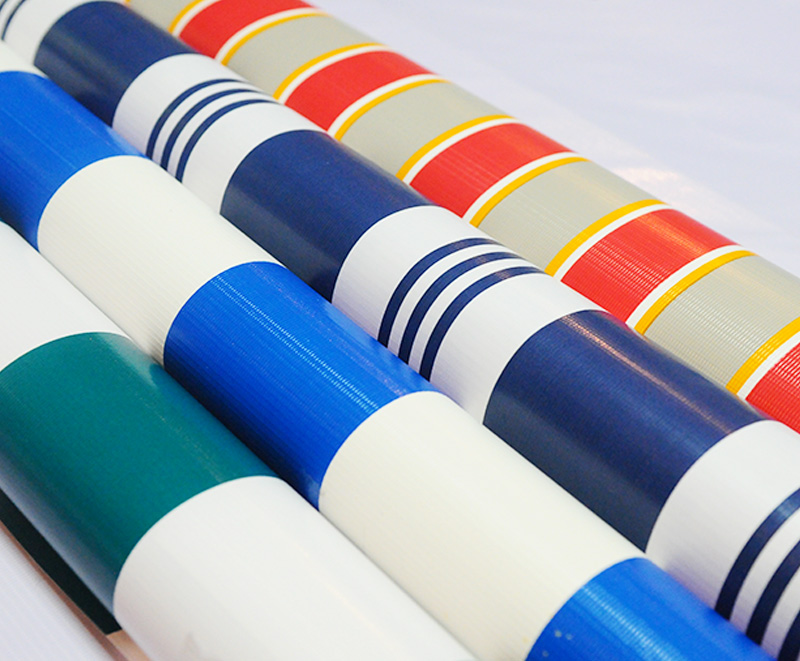
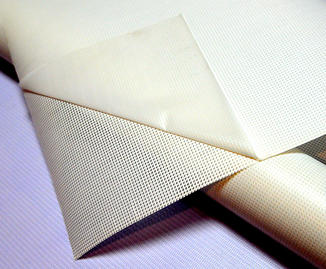
PVC tarpaulin is a composite material made from polyester scrim sandwiched between layers of polyvinyl chloride (PVC). Its inherent resistance to water, UV radiation, and tearing makes it ideal for outdoor use. However, these same properties make it tricky for printing. The surface is typically treated with plasticizers to maintain flexibility. If not properly prepared or printed with the right techniques, inks can migrate, smear, or fail to cure evenly.
To consistently produce smudge-free output, you must control three variables: surface energy, ink chemistry, and curing parameters. Ignoring any one of these can result in defects such as blurring, ink pooling, or rub-off during handling.
Pre-Printing Surface Preparation
The overlooked step is surface preparation. Many print providers assume that new rolls of PVC tarpaulin come ready for printing. In reality, residual plasticizers, dust, or mold-release agents can interfere with ink bonding.
A simple but effective cleaning protocol involves using a lint-free cloth and a mild isopropyl alcohol solution (70% concentration). Wipe the surface lightly before printing. For roll-to-roll systems, consider installing a corona treatment unit. Corona treatment increases the surface energy of PVC tarpaulin from around 35 dyne/cm to 50–55 dyne/cm. This higher energy level allows ink droplets to spread evenly and lock into micro-textures, drastically reducing smudging.
| Factor | Before Treatment | After Proper Treatment |
|---|---|---|
| Surface energy | ~35 dyne/cm | 50–55 dyne/cm |
| Ink contact angle | High (beading) | Low (spreading) |
| Smudge risk | High | Low to none |
| Print sharpness | Moderate | High-resolution capable |
Choosing the Right Ink System
Not all inks are compatible with PVC tarpaulin. Solvent, eco-solvent, UV-curable, and latex inks behave differently. For high-resolution work without smudging, two types dominate:
-
Solvent/Eco-solvent inks: These penetrate the surface slightly by softening the PVC layer. They offer good scratch resistance but require adequate ventilation and longer drying time. Smudging occurs if the ink is over-applied or if drying is rushed with excessive heat.
-
UV-curable inks: These cure instantly under UV light, forming a solid film on the surface. They produce the sharpest fine details and zero smudging because the ink solidifies before it can spread. The downside is slightly lower flexibility; thin tarpaulin may crack upon folding.
-
Latex inks: Water-based with a polymeric resin that fuses with heat. They work well on treated PVC tarpaulin and are smudge-resistant once cured. However, heat settings must be precise to avoid warping the material.
For smudge-free high-resolution prints, UV-curable printing is the reliable choice, especially for detailed graphics like barcodes or small text.
Optimizing Print Settings on Your Equipment
Even with good preparation and ink, incorrect machine settings ruin the output. Focus on these parameters:
1. Ink layer thickness – Higher resolution does not mean more ink. In fact, excessive ink increases smudging risk because the solvent or water carrier takes longer to evaporate. Use variable dot printing modes that place smaller droplets (e.g., 6–12 picoliters) instead of flooding the surface.
2. Pass number – Increasing passes improves detail but slows production. For PVC tarpaulin, 6 to 10 passes typically balance speed and quality. Beyond that, the wet ink accumulates and smudges under pinch rollers.
3. Inter-pass drying – In multi-pass printing, enable inter-pass drying (low heat or air flow) to set each layer before the next is applied. This is critical for solvent and latex inks.
4. Vacuum and tension – Poor vacuum causes the tarpaulin to lift, resulting in head strikes and ink smears. Set medium to high vacuum pressure. Keep tension consistent to avoid lateral movement.
Temperature and Curing Strategies
Smudging often appears days after printing. This delayed defect is usually due to incomplete curing or plasticizer migration. PVC tarpaulin contains migrating plasticizers that keep it flexible. If the ink layer does not fully crosslink or dry, these plasticizers can dissolve the ink film over time, causing a sticky, smeared appearance.
For solvent inks – Allow 24–48 hours of air drying in a clean, warm environment before rolling or folding. Forced hot air (40–50°C) reduces this to 2–4 hours but must not exceed 60°C to avoid surface melting.
For UV inks – Ensure the UV lamp output matches the ink’s spectral requirements (usually 395 nm or 365 nm). Check curing with a rub test: after printing, firmly rub a white cotton cloth across a solid area. Any color transfer indicates under-curing.
For latex inks – Follow the manufacturer’s recommended dryer temperature (typically 45–70°C) and ensure the heater covers the full platen width. Cold spots create uncured patches that smudge.
Handling and Post-Processing
Even a perfectly printed banner can smudge during finishing. After printing, allow the PVC tarpaulin to cool completely if heat was used. Stacking prints while warm traps solvents and causes offset smudging (ink transferring to the back of the sheet above).
When laminating or hemming, wait at least 24 hours for solvent inks to outgas. Premature lamination seals in solvents, turning the print permanently tacky. Use low-tack masking tape for registration marks; standard masking tape can lift uncured ink.
For storage, interleave printed PVC tarpaulin with release liner or kraft paper if rolls must be stacked. Never roll a print with the printed side facing outward – always roll with the printed side inward to protect the surface.
Working with PVC Tarpaulin Manufacturers
Consistent results begin with consistent raw materials. Reliable PVC tarpaulin manufacturers provide detailed technical data sheets that specify surface treatment levels, plasticizer type, and recommended ink families. When sourcing material, request the following information:
- Dyne level of the printable side (minimum 42 dyne/cm for solvent ink, 48 dyne/cm for UV/ latex)
- Plasticizer classification (e.g., phthalate vs. non-phthalate – non-phthalate types migrate less)
- Maximum heat tolerance (important for latex and drying)
Reputable PVC tarpaulin manufacturers often offer pre-treated or “print-ready” grades. These have a higher surface energy and a slightly matte finish, which improves ink grip. Avoid glossy tarpaulin for high-resolution work unless you have a corona treater.
Building a relationship with suppliers also helps in troubleshooting. If smudging appears only on certain batches, the issue might be a change in the manufacturer’s coating formulation. Ask for batch samples before large production runs.
Common Smudging Scenarios and Fixes
| Problem | Likely Cause | Solution |
|---|---|---|
| Ink smears immediately after printing | Too much ink per pass; insufficient drying | Reduce ink limit; enable inter-pass drying |
| Smudging under rollers | Incomplete curing; tacky surface | Increase curing temperature or lamp power |
| Delayed smudging (after 1 week) | Plasticizer migration | Switch to UV ink or low-migration solvent ink; ask PVC tarpaulin manufacturers for low-plasticizer grades |
| Fine text blurry | Low surface energy | Corona treatment or alcohol wipe |
| Ink rubs off when folded | Under-cured or wrong ink type | Extend cure time; test ink compatibility |
Final Checklist for Smudge-Free High-Resolution Prints
To summarize, follow this sequence every time you print on PVC tarpaulin:
Inspect the material – Check the dyne level or perform a water break test (water should not bead up).
Clean or treat the surface – Use isopropyl alcohol or corona treatment.
Select the right ink – UV-curable is safest for fine detail; solvent works if properly dried.
Set printer parameters – Low ink volume, appropriate passes, inter-pass drying.
Cure thoroughly – Match time and temperature to ink type; test with rub or tape pull.
Cool and handle gently – No stacking or rolling until completely cooled and outgassed.
Source wisely – Work with experienced PVC tarpaulin manufacturers who can document surface properties.
Conclusion
Achieving high-resolution prints on PVC tarpaulin without smudging is not a matter of luck – it is a repeatable process based on surface preparation, correct ink chemistry, precise curing, and smart handling. By respecting the unique properties of PVC tarpaulin and applying the techniques outlined above, any print shop can produce outdoor banners and signage with photographic sharpness and long-term durability. The key is to treat the material not as paper, but as an engineered substrate that responds predictably to controlled energy input and chemical compatibility. When in doubt, always test new batches of material from PVC tarpaulin manufacturers before full production, and keep records of successful parameter sets for each product type.