 English
 Español
 中文简体

What Should Buyers Know About PVC Blockout Flex Banner Roll Material?
Content
- 1 What Is PVC Blockout Flex Banner Roll Material?
- 2 Key Technical Features of PVC Blockout Flex Banner Roll Material
- 3 Common Applications of PVC Blockout Flex Banner Roll Material
- 4 PVC Blockout Flex Banner vs Other Flex Banner Materials
- 5 How to Select PVC Blockout Flex Banner Roll Material for Bulk Purchasing
- 5.1 1. Select the Appropriate Weight and Yarn Construction
- 5.2 2. Evaluate Laminated or Hot-Roll Production
- 5.3 3. Confirm Printing Ink Compatibility
- 5.4 4. Check Opacity and Double-Sided Printing Quality
- 5.5 5. Evaluate Finishing and Installation Requirements
- 5.6 6. Assess Supplier Capacity and OEM or ODM Support
- 5.7 7. Compare Total Purchasing Cost Instead of Unit Price Alone
- 6 Quality Control Considerations for PVC Blockout Banner Rolls
- 7 Why Manufacturing Experience Matters When Choosing a PVC Blockout Flex Banner Supplier
- 8 How to Request a Wholesale Quotation for PVC Blockout Flex Banner
- 9 Frequently Asked Questions About PVC Blockout Flex Banner Roll Material
- 9.0.1 Q1: What is PVC blockout flex banner roll material used for?
- 9.0.2 Q2: Can PVC blockout flex banner be used for double-sided printing?
- 9.0.3 Q3: What is the available weight range of blockout flex banner rolls?
- 9.0.4 Q4: Which printing inks are suitable for PVC blockout flex banner?
- 9.0.5 Q5: What is the difference between laminated and hot-roll blockout flex banner?
- 9.0.6 Q6: Is blockout flex banner suitable for outdoor signage?
- 9.0.7 Q7: How can I obtain a PVC blockout flex banner roll material price?
- 9.0.8 Q8: What roll widths are available for PVC blockout banner?
- 9.0.9 Q9: What should wholesale buyers check before placing a bulk order?
- 9.0.10 Q10: Can PVC blockout flex banner rolls be customized?
- 10 Choosing the Right PVC Blockout Flex Banner for Your Next Project
Choosing a suitable banner substrate is not simply a matter of comparing roll prices or selecting a preferred weight. For printing companies, advertising material distributors, sign manufacturers, and wholesale buyers, the material must meet several requirements at the same time: reliable opacity, stable printing performance, appropriate mechanical strength, and compatibility with the intended display environment. These factors become particularly important when a project requires graphics on both sides of a banner or when ambient light could interfere with image visibility.
PVC blockout flex banner roll material is designed to address these requirements through an opaque internal structure that limits light transmission between the two printed surfaces. Unlike conventional frontlit materials, which are primarily intended for single-sided graphics, blockout banner fabric separates the front and back printing areas. This construction makes it suitable for suspended advertising, retail displays, exhibition graphics, outdoor promotional signs, and other applications where controlled visibility is important.
However, not all blockout materials provide the same results. Differences in coating, lamination, base fabric, weight, surface treatment, and production consistency can affect printing quality and service performance. Buyers therefore need to evaluate the complete material specification rather than relying on a single parameter.
This guide explains how blockout flex banner works, which specifications matter during purchasing, how it compares with other banner substrates, and how printing businesses can evaluate suppliers for long-term wholesale cooperation.
What Is PVC Blockout Flex Banner Roll Material?
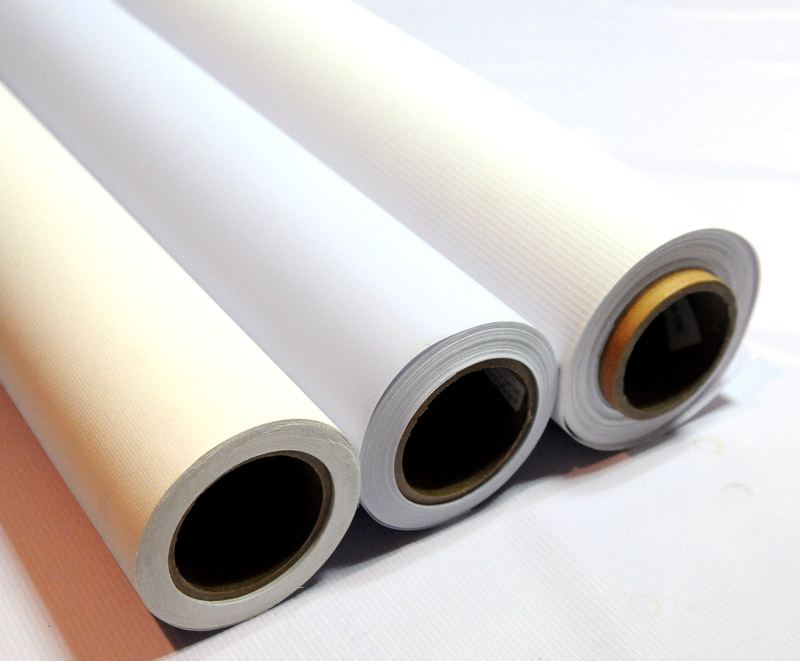
PVC blockout flex banner roll material is a flexible advertising substrate manufactured with an opaque central layer between two PVC-based outer surfaces. Its main purpose is to prevent light from passing through the material, reducing the visibility of graphics from the opposite side. Depending on the construction and surface treatment, the material can support printing on both sides while maintaining a relatively consistent appearance.
The typical structure contains three functional layers:
How Does Blockout Flex Banner Achieve Light-Blocking Performance?
The central barrier is the defining feature of a blockout banner. Conventional PVC frontlit fabric generally allows light to pass through to some extent. This is useful when the graphic is viewed primarily from one side under normal ambient lighting. However, when a banner is illuminated from behind or carries different graphics on its two surfaces, light transmission may create unwanted visual interference.
A blockout structure addresses this issue by incorporating an opaque middle layer. This barrier limits the amount of light passing between the front and reverse surfaces. As a result, separately printed graphics are less likely to show through from the opposite side. The actual blocking performance depends on the internal layer, material thickness, manufacturing consistency, and the integrity of the laminated construction.
For buyers, opacity should be assessed under realistic lighting conditions. A material that looks opaque when held against a dark background may behave differently when exposed to strong daylight or artificial illumination. Sample testing under the intended display conditions is therefore advisable, especially for high-visibility double-sided projects.
What Is the Role of the Laminated Production Process?
Lamination is a manufacturing method in which separately prepared material layers are bonded together to form a composite banner substrate. In a typical laminated blockout construction, PVC outer layers are combined with an opaque central layer. The resulting material provides two functional printing surfaces and a light-blocking core.
Cold lamination and hot lamination refer to different bonding approaches. Their suitability depends on the formulation, equipment, bonding conditions, and production controls. Cold lamination is used in manufacturing processes that aim to limit excessive heat exposure during layer bonding. It should not automatically be regarded as better in every situation: adhesive selection, bonding strength, surface uniformity, and process stability remain essential evaluation factors.
For advertising material buyers, the important question is whether the finished roll maintains consistent bonding and surface quality throughout its usable length. Poor bonding can result in separation, wrinkles, bubbles, or uneven surfaces, all of which may affect printing and installation.
Laminated Blockout Flex Banner vs Hot-Roll Construction
Production methods can influence the physical properties and printing behavior of the finished product. Laminated PVC blockout banner generally uses separately prepared layers, whereas hot-roll production relies on heat and pressure to combine material components during processing. The exact construction differs between manufacturers, so buyers should request technical information instead of assuming that every product under the same process name is identical.
| Evaluation Factor | Laminated Construction | Hot-Roll Construction |
|---|---|---|
| Layer Formation | Separately prepared layers bonded together | Layers combined through a heated rolling process |
| Process Control | Bonding conditions and layer consistency require monitoring | Temperature, pressure, and material flow require monitoring |
| Printing Surface | Depends on PVC formulation and surface treatment | Depends on formulation and production conditions |
| Key Quality Risk | Insufficient bonding or layer separation | Uneven thickness or process-related surface variation |
| Buyer Inspection | Check adhesion, flatness, opacity, and printing response | Check uniformity, opacity, flexibility, and printing response |
For laminated blockout flex banner procurement, buyers should request samples and evaluate actual performance rather than choosing a product based solely on its manufacturing description. Ink absorption, color consistency, flexibility, and aging resistance should all be considered.
Key Technical Features of PVC Blockout Flex Banner Roll Material
Technical specifications determine whether a roll is appropriate for a particular printing machine, finishing method, and display environment. Weight and width are important purchasing parameters, but they should be evaluated alongside fabric construction, surface treatment, opacity, and mechanical behavior.
Physical and Printing Performance
The available product specification range covers approximately 220 to 610 gsm. Different weights provide different combinations of flexibility, material body, handling characteristics, and application suitability. The correct choice depends on the size of the finished banner, installation method, expected exposure, and printing requirements.
| Specification | Available Range or Option | Purchasing Consideration |
|---|---|---|
| Material Weight | 220-610 gsm | Consider application, strength, and handling requirements |
| Yarn Specification | 200 x 300 to 1000 x 1000 | Evaluate fabric construction and dimensional stability |
| Roll Width | 1.00-3.20 m | Match printer capacity and finished graphic dimensions |
| Surface Structure | Two PVC-based printable surfaces | Check surface uniformity and ink compatibility |
| Internal Structure | Opaque black or grey barrier | Evaluate light-blocking performance |
| Printing Systems | Solvent, eco-solvent, UV, and latex | Confirm compatibility through machine testing |
| Supply Format | Roll material | Confirm roll length, packaging, and core requirements |
These specifications provide a starting point for comparing 220-610gsm PVC blockout flex banner roll options. They should not be interpreted as a guarantee that every combination of weight, yarn count, and width is available in every construction. Buyers should confirm the actual production configuration before placing a bulk order.
Why Does Fabric Density Matter?
The base fabric contributes to the mechanical properties of the banner. Yarn construction and density influence tensile behavior, dimensional stability, flexibility, and resistance to deformation during handling. A denser reinforcement structure may be suitable for projects requiring additional mechanical support, but density alone does not establish the complete strength of the finished product.
The PVC coating or laminated layers also contribute to the overall properties. Two products with similar weight and yarn specifications may have different flexibility, surface behavior, or bonding performance because of differences in formulation and manufacturing controls.
When evaluating a roll, printing businesses should inspect the following:
- Uniformity of the fabric surface and coating thickness.
- Consistency of the opaque central layer.
- Resistance to wrinkles during unwinding and feeding.
- Dimensional stability after printing and finishing.
- Adhesion between functional layers.
- Flexibility during folding, rolling, and installation.
Surface Quality and Ink Absorption
Printing performance depends on the interaction between the ink system and the material surface. A suitable PVC surface should provide consistent ink reception and allow the printed image to develop without excessive spreading, uneven drying, or noticeable color variation.
Surface treatment, coating formulation, and manufacturing uniformity influence the final result. An overly inconsistent surface can produce differences in density or gloss across the printed area. This is particularly noticeable in large-format graphics containing solid colors, gradients, fine text, or detailed photographs.
Before purchasing a large quantity, buyers should conduct a print test using their actual machine settings. Evaluate color reproduction, drying or curing behavior, ink adhesion, scratch resistance, and the appearance of the printed surface after finishing.
Available Roll Dimensions and Customization
Roll width affects material utilization and production efficiency. A width that closely matches the printer and finished graphic dimensions can reduce unnecessary trimming and material waste. The available width range of 1.00 to 3.20 meters provides options for different large-format printing requirements.
Wholesale buyers should also confirm roll length, core diameter, maximum roll diameter, packaging method, and acceptable dimensional tolerances. These details are particularly relevant when materials are purchased in containers or distributed through regional warehouses.
OEM and ODM discussions can cover weight, width, surface characteristics, roll specifications, packaging, and other agreed production requirements. Customization should be confirmed through a written specification sheet before mass production.
Common Applications of PVC Blockout Flex Banner Roll Material
Blockout banner is selected when the display requires reduced light transmission through the substrate or when separate images need to appear on opposite surfaces. Its application range extends across outdoor advertising, indoor commercial displays, exhibition graphics, and temporary promotional installations.
Outdoor Advertising Signage
Outdoor advertising frequently exposes banner materials to sunlight, wind, temperature changes, moisture, and repeated mechanical stress. Blockout flex banner can be used for outdoor promotional graphics where an opaque background is required. Typical applications include building advertisements, roadside promotional signs, fence banners, pole displays, and large-format campaign graphics.
Material selection should consider the expected display duration and installation environment. Higher material weight may be appropriate where additional body and handling strength are required, but the finished banner also depends on edge reinforcement, welding quality, eyelet spacing, tension, and mounting structure.
Outdoor performance should not be judged by weight alone. Buyers should request relevant information about weathering resistance, UV exposure, tensile properties, and product testing. Installation design is equally important because wind load and unsupported banner area can create significant stress.
Indoor Signage and Trade Show Displays
Indoor advertising requires materials that can maintain a neat appearance under commercial lighting while supporting efficient installation and removal. Blockout material is useful for exhibition backgrounds, retail window graphics, hanging signs, promotional displays, and temporary event decorations.
In exhibition environments, graphics may be positioned near windows, illuminated display structures, or strong overhead lighting. An opaque substrate helps reduce interference from light behind the printed image. It also allows different promotional messages to be presented on the two sides of a suspended display.
For retail applications, buyers should consider surface finish, color reproduction, print resolution, and the visual distance from which customers will view the graphic. A lightweight option may be easier to handle for short-term indoor displays, while larger suspended installations may require additional mechanical support.
Double-Sided Printing Projects
Double-sided printing is one of the main reasons buyers choose blockout banner rather than standard frontlit material. A central opaque layer reduces the visibility of the opposite graphic, allowing each surface to communicate a separate message.
Common examples include:
- Suspended retail promotional banners viewed from two directions.
- Street pole advertising carrying different campaign messages.
- Trade show hanging graphics positioned above visitor walkways.
- Temporary event banners installed across entrances and open spaces.
- Directional signage displayed in shopping centers and public venues.
For double-sided production, both printed surfaces need to be checked independently. Image alignment, registration, color consistency, and the finishing direction should be planned before printing. The opaque structure helps isolate the graphics, but it does not automatically correct printing or installation errors.
Advertising Projects Requiring Visual Separation
Some advertising environments involve multiple light sources or overlapping visual elements. A standard banner may allow unwanted light transmission, particularly when installed in front of a bright window or illuminated background. Blockout material provides a more controlled visual background for these applications.
It is important to distinguish between an opaque advertising substrate and a dedicated light-control product. Blockout banner is designed to limit light transmission through the material. It should not be assumed to provide complete room darkening, thermal insulation, or specialized light-control performance beyond its intended advertising application.
PVC Blockout Flex Banner vs Other Flex Banner Materials
Different flex banner materials are developed for different lighting conditions and display purposes. Choosing the wrong type can increase printing costs, reduce graphic visibility, or create unnecessary material consumption. The most useful comparison is based on the direction of illumination, viewing position, and whether one or both surfaces require printing.
Blockout Flex Banner vs Frontlit Flex Banner
Frontlit flex banner is designed primarily for graphics viewed under front illumination. It is widely used for conventional outdoor signs, advertising boards, promotional banners, and printed displays. Its structure generally allows more light transmission than a blockout product.
Blockout material incorporates an opaque central barrier. This makes it more suitable when the banner needs to separate two printed surfaces or when light from behind could interfere with the front graphic.
| Comparison | Blockout Flex Banner | Frontlit Flex Banner |
|---|---|---|
| Light Transmission | Designed to restrict light transmission | Allows comparatively greater light transmission |
| Printing Sides | Suitable for double-sided printing | Primarily used for single-sided graphics |
| Main Purpose | Opaque advertising and two-sided displays | Conventional front-illuminated advertising |
| Typical Applications | Hanging banners, pole signs, exhibition displays | Billboards, fences, promotional signs |
| Selection Priority | Opacity and separation between graphics | Printing quality and general advertising suitability |
When a project only requires one graphic viewed from the front, frontlit material may be a more economical choice. When the reverse image must remain visually separate, blockout is generally more appropriate.
Blockout Flex Banner vs Backlit Flex Banner
Backlit flex banner is designed to work with light sources positioned behind the printed surface. Its purpose is to transmit and distribute light so that graphics remain visible when illuminated from the rear. It is commonly used in light boxes and illuminated advertising displays.
Blockout material has the opposite functional priority. It restricts light transmission rather than encouraging it. Therefore, using an opaque blockout substrate in a display that requires rear illumination would generally conflict with the intended lighting design.
| Factor | Blockout Banner | Backlit Banner |
|---|---|---|
| Light Behavior | Limits transmission | Allows controlled transmission |
| Lighting Arrangement | Normal ambient or front illumination | Rear illumination |
| Graphic Purpose | Maintain visual separation | Display graphics with backlighting |
| Typical Uses | Double-sided banners and opaque signs | Light boxes and illuminated displays |
Blockout Flex Banner vs Mesh Banner
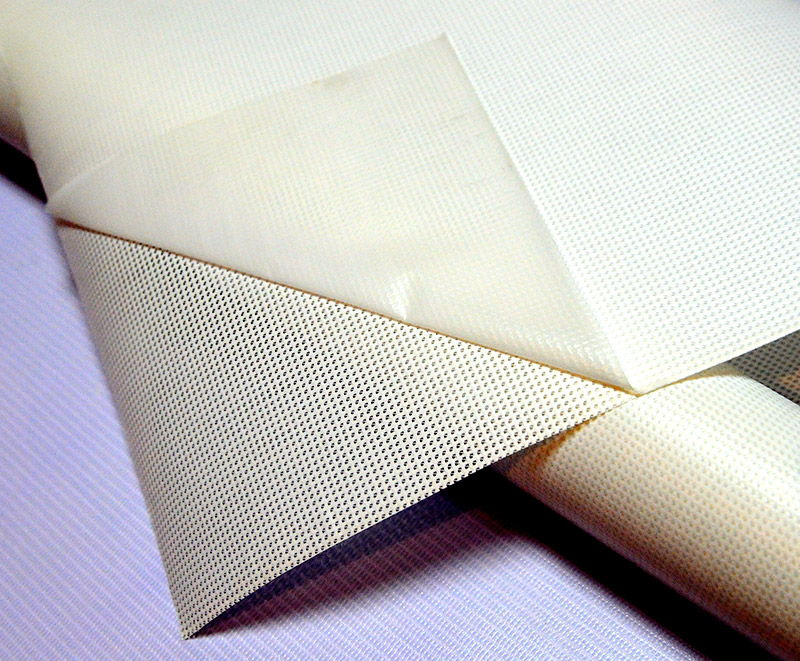
Mesh banner is a perforated advertising material designed to allow air to pass through its surface. This characteristic makes it suitable for certain large outdoor installations, building wraps, scaffolding advertisements, and locations exposed to wind.
Blockout banner uses an opaque structure instead of an open mesh construction. It provides a more continuous printable surface and is suitable for applications requiring visual separation. Mesh may be more appropriate where airflow and reduced wind resistance are primary concerns.
The selection depends on the installation environment. A large outdoor banner exposed to substantial wind loads may require a mesh construction or an engineered support system. A double-sided hanging display requiring opaque graphics is more likely to need blockout material.
When Should Buyers Choose Blackout PVC Flex Banner?
Blackout PVC flex banner is another descriptive term used for opaque PVC banner materials. Buyers should verify whether the product actually contains a dedicated light-blocking layer instead of relying only on the product name.
Blockout construction is worth considering when:
- Different images need to be printed on opposite sides.
- Strong background lighting may interfere with graphic visibility.
- The installation requires an opaque advertising surface.
- A suspended display will be viewed from multiple directions.
- Conventional frontlit fabric does not provide sufficient light separation.
How to Select PVC Blockout Flex Banner Roll Material for Bulk Purchasing
Wholesale purchasing involves more than identifying a suitable product specification. Buyers must consider printing equipment, expected order volume, finishing requirements, transportation, storage, and the consistency of future supply. A structured evaluation process helps reduce material incompatibility and production waste.
1. Select the Appropriate Weight and Yarn Construction
The first step is to match material weight to the application. Within the available 220 to 610 gsm range, lighter materials may be considered for certain indoor promotional projects where ease of handling is important. Heavier constructions may be more suitable for applications requiring additional material body and mechanical support.
However, higher weight does not automatically mean better performance. A heavier roll may increase transportation costs and affect handling, while a lighter product may meet the requirements of a particular display more efficiently. Buyers should compare tensile properties, tear resistance, flexibility, and actual installation requirements.
Yarn specifications also need to be evaluated. The listed range from 200 x 300 to 1000 x 1000 represents different fabric construction options. The appropriate specification depends on the required mechanical behavior and the finished material structure.
2. Evaluate Laminated or Hot-Roll Production
Manufacturing processes can influence adhesion, surface consistency, and the finished material's response to environmental conditions. Buyers comparing laminated and hot-roll options should request information about layer construction, bonding control, and relevant quality inspections.
Outdoor exposure deserves particular attention. Ultraviolet radiation, temperature fluctuations, moisture, and repeated mechanical stress can gradually affect PVC materials. The service performance of the finished banner depends on its formulation, reinforcement, production process, and installation conditions.
Do not assume that a specific production method guarantees a particular service life. Instead, request available test information, inspect samples, and evaluate whether the material is appropriate for the expected exposure period.
3. Confirm Printing Ink Compatibility
Different printing systems use different ink formulations and curing or drying mechanisms. A banner that works well with one printer may not produce the same result on another machine. Confirming compatibility before bulk purchasing is therefore essential.
Solvent Ink
Commonly used for outdoor large-format graphics. Test adhesion, drying, color density, and surface response.
Eco-Solvent Ink
Used in various commercial sign-printing applications. Confirm the recommended material profile and drying conditions.
UV Ink
Cured using ultraviolet exposure. Check curing consistency, adhesion, flexibility, and resistance to cracking during finishing.
Latex Ink
Requires suitable surface characteristics and thermal processing compatibility. Test the material under the intended printer settings.
For each ink system, a practical test should include solid-color printing, fine details, gradients, and representative images. Evaluate the printed result after the recommended drying or curing period. For outdoor projects, additional checks may include water exposure, surface rubbing, and weathering performance.
4. Check Opacity and Double-Sided Printing Quality
Opacity is a central purchasing requirement for blockout material. A sample should be examined under different lighting conditions, including bright daylight and artificial backlighting. Buyers should assess whether the opposite-side image remains visible and whether the central barrier is uniform across the material.
For double-sided production, print a representative graphic on each surface. Use contrasting colors and areas of high image density to identify possible visual interference. Also check whether the two printed surfaces maintain consistent color reproduction and whether the finished banner remains flat after printing.
5. Evaluate Finishing and Installation Requirements
Printing is only one part of banner production. The material may need cutting, welding, hemming, eyelet installation, sewing, or other finishing operations. A substrate that prints well but performs poorly during welding or folding can create additional production costs.
Buyers should confirm whether the selected construction is compatible with their existing finishing equipment. Sample rolls can be used to evaluate edge formation, welding strength, folding behavior, and resistance to surface damage during handling.
6. Assess Supplier Capacity and OEM or ODM Support
A wholesale supplier should be able to provide clear specifications, production information, sample support, and communication throughout the order process. Consistency between sample approval and mass production is particularly important for distributors that need to maintain stable product specifications across multiple orders.
When comparing suppliers, consider the following points:
- Manufacturing experience in PVC flex banner materials.
- Production equipment and process control procedures.
- Available weight, width, and fabric construction options.
- Quality inspection and batch identification procedures.
- Sample availability and technical communication.
- OEM and ODM customization capabilities.
- Export packaging and shipment coordination.
- Response procedures for quality issues and after-sales support.
7. Compare Total Purchasing Cost Instead of Unit Price Alone
The PVC blockout flex banner roll material price is influenced by several factors, including weight, fabric construction, raw material formulation, width, production process, order quantity, and customization requirements. Packaging, shipping terms, and destination also affect the final procurement cost.
Buyers should compare quotations using equivalent specifications. Comparing a lightweight roll with a heavier reinforced product based only on price per roll can lead to misleading conclusions. A more useful comparison considers the price per square meter, usable material yield, printing performance, finishing efficiency, and expected replacement frequency.
Material consistency also has an economic impact. Rolls with uneven surfaces or inconsistent opacity may increase printing adjustments, rejected output, and labor consumption. For commercial printing businesses, these operational costs can be as important as the original purchase price.
Quality Control Considerations for PVC Blockout Banner Rolls
Quality inspection should cover raw materials, production processes, finished rolls, and packaging. A systematic approach helps identify problems before the material reaches the printing facility. It also provides a more objective basis for evaluating different production batches.
Visual Inspection
Start with the appearance of the roll. Check whether the surface is smooth and uniform, whether there are visible wrinkles or bubbles, and whether the material contains contamination, scratches, or noticeable color variation. Inspect both sides because each surface may be used for printing.
Dimensional Inspection
Measure the actual width and verify the roll length against the agreed specification. Thickness and weight should also be checked using a consistent sampling method. For regular wholesale orders, agreed tolerances should be documented before production.
Bonding and Opacity Inspection
Check for layer separation, localized bubbles, and uneven bonding. A light inspection can help identify inconsistencies in the opaque central layer. For more demanding applications, buyers may request an agreed opacity test method and acceptance criteria.
Printing and Mechanical Testing
Print representative graphics using the intended ink system and equipment. Examine ink adhesion, color appearance, drying or curing, and surface condition. Mechanical evaluation may include tensile behavior, tear resistance, folding, and welding tests, depending on the intended application.
Verify raw materials and production specifications.
Monitor surface uniformity and layer bonding.
Check dimensions, opacity, and printing response.
Verify roll protection and shipment identification.
The acceptance criteria should be agreed before the order is confirmed. For repeated purchases, keeping reference samples and inspection records can help buyers compare production batches and identify changes over time.
Why Manufacturing Experience Matters When Choosing a PVC Blockout Flex Banner Supplier
Manufacturing capability affects more than the ability to produce a particular roll specification. It also determines how consistently a supplier can control raw materials, lamination, surface treatment, dimensional accuracy, and finished product inspection.
For importers and advertising material wholesalers, a reliable production relationship can simplify repeat purchasing and reduce the need to adjust printing parameters whenever a new shipment arrives.
Production Experience and Process Understanding
More than 20 years of manufacturing experience provides an established background in understanding PVC material processing and the requirements of different advertising applications. Experience is most valuable when it is supported by documented production procedures, technical knowledge, and practical quality management.
Buyers should ask how a manufacturer controls variations in fabric reinforcement, PVC formulation, coating, and bonding. These factors influence the consistency of the final product and should be considered together rather than evaluated independently.
Production Equipment and Manufacturing Control
Production equipment is an important part of manufacturing capability. Calendering and laminating equipment are used in different stages of PVC material processing. Equipment condition, operating parameters, maintenance, and operator experience can all influence material uniformity.
Manufacturers using Taiwanese calendering and laminating equipment can provide relevant production information to buyers evaluating equipment configuration and process capability. However, equipment origin alone does not determine finished product quality. Process control and inspection standards remain necessary.
For wholesale orders, useful manufacturing information includes:
- Equipment configuration for the relevant product structure.
- Production capacity and order scheduling arrangements.
- Raw material inspection and formulation control.
- Monitoring of layer bonding and surface consistency.
- Finished roll inspection and batch traceability.
OEM and ODM Customization
Different distributors may require different roll widths, weights, packaging methods, and product specifications. OEM and ODM support can help align the supplied material with regional market requirements and customer preferences.
Before customization begins, the buyer and manufacturer should establish a technical specification sheet. This document should identify the material structure, weight, width, yarn construction, roll length, packaging, and relevant quality requirements. A sample should be approved before large-scale production.
Export Experience and After-Sales Communication
International wholesale purchasing involves technical communication, production coordination, packaging, shipping documentation, and delivery planning. A manufacturer familiar with export orders can help buyers clarify these requirements before shipment.
After-sales support is also relevant. If a printing problem occurs, the supplier should be able to review the product batch, agreed specifications, storage conditions, and printing parameters. Clear communication makes it easier to determine whether the issue is related to the material, equipment settings, finishing process, or installation environment.
How to Request a Wholesale Quotation for PVC Blockout Flex Banner
A complete inquiry helps manufacturers prepare a more accurate quotation and reduces unnecessary communication during order confirmation. Instead of requesting a general price for blockout banner rolls, buyers should provide the basic technical and commercial requirements.
Information to Include in a Purchase Inquiry
| Inquiry Detail | Information to Provide |
|---|---|
| Application | Outdoor signs, indoor displays, exhibition graphics, or double-sided banners |
| Weight | Required gsm or preferred weight range |
| Fabric Construction | Preferred yarn specification, if applicable |
| Roll Width | Required width and acceptable tolerance |
| Roll Length | Required length per roll |
| Printing System | Solvent, eco-solvent, UV, or latex |
| Quantity | Sample quantity, trial order, or estimated bulk volume |
| Customization | Packaging, labeling, or special production requirements |
| Destination | Delivery country and preferred shipping terms |
How Is the PVC Blockout Flex Banner Roll Material Price Determined?
There is no single price applicable to every blockout banner specification. A quotation depends on the selected material weight, reinforcement construction, production process, roll dimensions, order quantity, and customization requirements. Freight and delivery arrangements should be considered separately when comparing supplier offers.
For a meaningful comparison, buyers should request quotations based on the same technical specifications. They should also confirm whether the quoted price includes the agreed packaging and whether samples are available for printing evaluation.
For regular purchasing, discussing forecast order quantities and repeat-order requirements may help both parties plan production more efficiently. The final price and delivery schedule should always be confirmed in a formal quotation or order agreement.
Why Request a Sample Before Bulk Purchasing?
A sample provides an opportunity to verify the material against actual production conditions. Buyers can check opacity, printing performance, flexibility, surface consistency, and finishing compatibility before committing to a larger order.
For double-sided advertising, a sample should ideally be printed on both surfaces. This makes it possible to assess visual separation and registration requirements. If the material will be installed outdoors, buyers should also review the relevant product performance information and installation requirements.
Frequently Asked Questions About PVC Blockout Flex Banner Roll Material
PVC blockout flex banner roll material is used for advertising and display projects that require an opaque printable substrate. Common applications include double-sided hanging banners, outdoor promotional signs, exhibition graphics, retail displays, pole advertisements, and commercial signage. Its opaque central layer reduces light transmission between the front and reverse surfaces.
Yes. Its construction is designed to support printing on both surfaces. The opaque central layer helps prevent the front-side graphic from showing through on the reverse side. For the best result, buyers should test image alignment, ink compatibility, and opacity under the intended lighting conditions before mass production.
The available weight range for the specified product is approximately 220 to 610 gsm. The appropriate weight depends on the application, installation method, required material body, and handling conditions. Buyers should confirm the available weight and corresponding construction with the manufacturer before ordering.
The material is specified for solvent, eco-solvent, UV, and latex printing systems. Actual compatibility depends on the surface formulation, printer configuration, ink properties, and processing conditions. A sample print test is recommended to verify adhesion, color reproduction, drying or curing behavior, and finishing performance.
Laminated blockout banner is manufactured by bonding separately prepared layers, while hot-roll construction combines material components through a heated rolling process. Both methods require appropriate process control. Buyers should compare bonding quality, surface consistency, opacity, printing behavior, and relevant performance test results instead of relying only on the production method.
It can be used for outdoor signage, including promotional banners, building advertisements, fence displays, and pole signs. The correct specification should be selected according to exposure duration, sunlight, wind, temperature changes, and installation conditions. Buyers should check relevant weathering and mechanical performance information before selecting a material for long-term outdoor use.
Provide the required weight, width, yarn specification, roll length, printing system, quantity, customization requirements, and delivery destination. These details allow the manufacturer to prepare a quotation based on the intended specification. Buyers can also request samples to evaluate printing and material performance before confirming a wholesale order.
The specified width range is approximately 1.00 to 3.20 meters. Actual availability may depend on the selected weight, construction, and production requirements. Buyers should confirm the required width, tolerance, and roll dimensions when requesting a quotation.
Q9: What should wholesale buyers check before placing a bulk order?
Wholesale buyers should verify material weight, yarn construction, width, roll length, opacity, surface uniformity, layer bonding, and ink compatibility. They should also evaluate packaging, batch consistency, production capacity, and delivery arrangements. Approving a sample and documenting the technical specifications before mass production can help reduce purchasing risks.
Customization can be discussed according to production capability and order requirements. Common considerations include material weight, width, roll dimensions, fabric construction, and packaging. Buyers should provide their technical requirements in advance and confirm the final specification through an approved sample or written product specification.
Choosing the Right PVC Blockout Flex Banner for Your Next Project
Selecting a suitable blockout banner requires a balance between opacity, physical properties, printing compatibility, production requirements, and purchasing cost. For projects involving double-sided graphics or advertising displays exposed to background light, the internal opaque layer provides an important functional advantage over conventional frontlit materials.
However, buyers should not evaluate a product by its name or weight alone. Fabric construction, layer bonding, surface treatment, roll dimensions, ink compatibility, and quality consistency all influence the finished result. A clear technical specification and practical sample testing provide a more reliable basis for wholesale purchasing.
For distributors, advertising material wholesalers, and commercial printing businesses, working with a manufacturer that understands PVC processing and international order requirements can also support repeat purchasing and product customization.
When evaluating PVC blockout flex banner roll material, buyers can compare the available 220 to 610 gsm weight range, 1.00 to 3.20 meter width options, fabric construction, and compatible printing systems according to their project needs. Preparing these details in advance makes it easier to discuss samples, specifications, bulk quantities, and delivery arrangements.
Discuss Your Blockout Banner Requirements
Prepare your required weight, width, roll dimensions, printing method, and estimated quantity to obtain product information and a quotation for your next order.
View Product Specifications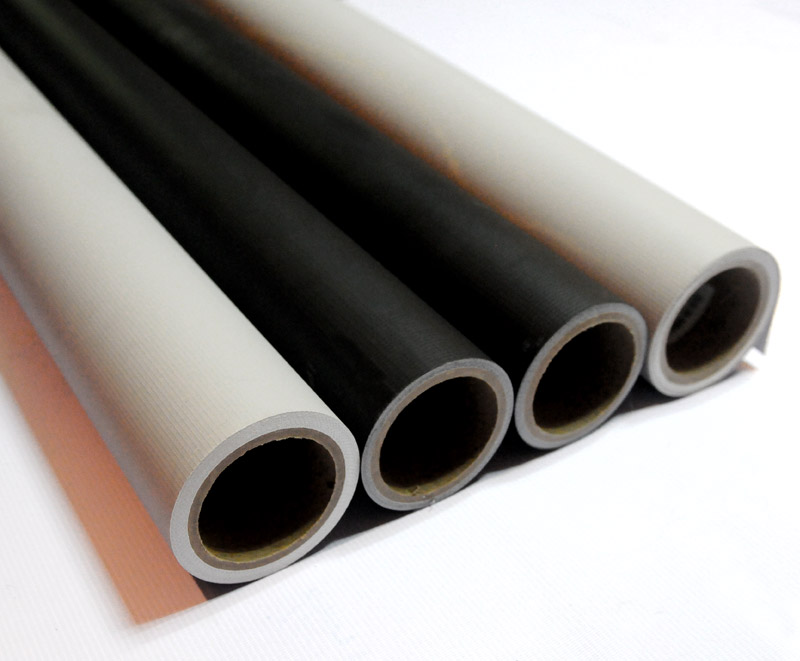
 +86-573-88890126
 adam@ml-holding.cn
 No. 28, Shuguang Road, Tudian Town, Tongxiang City, Zhejiang Province, 314503, China
Copyright © Zhejiang Minglong New Material Technology Co., Ltd. All rights reserved.
Custom Digital Printing Banner Material Manufacturers
